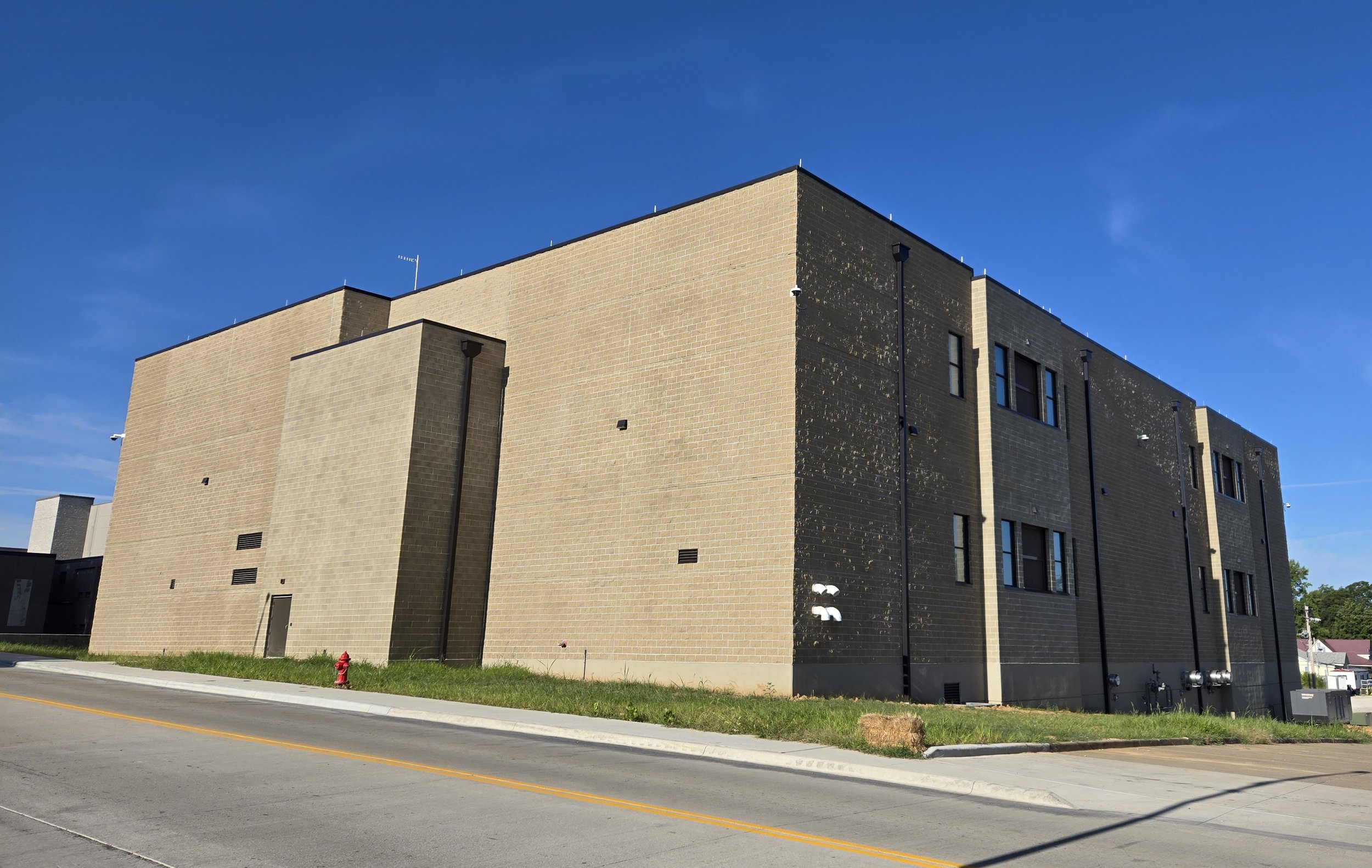
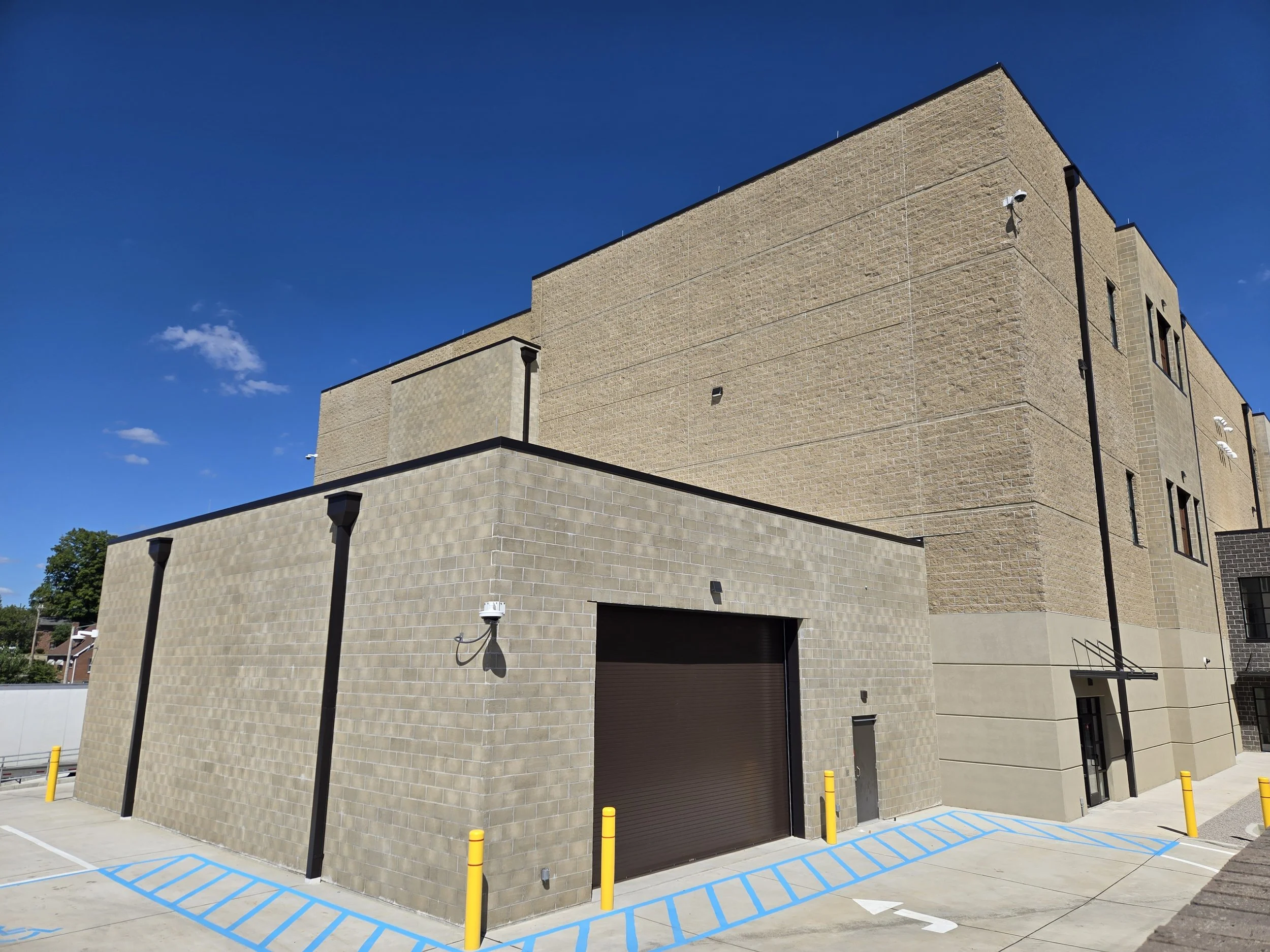
Cape Girardeau County Jail
Project Details
Project Scope: 80,000 SF Expansion and 21,700 SF Renovation of the Cape Girardeau County Jail
Owner: County of Cape Girardeau
Location: 216 N. Missouri Street, Jackson, MO
Project Delivery: Design-Build
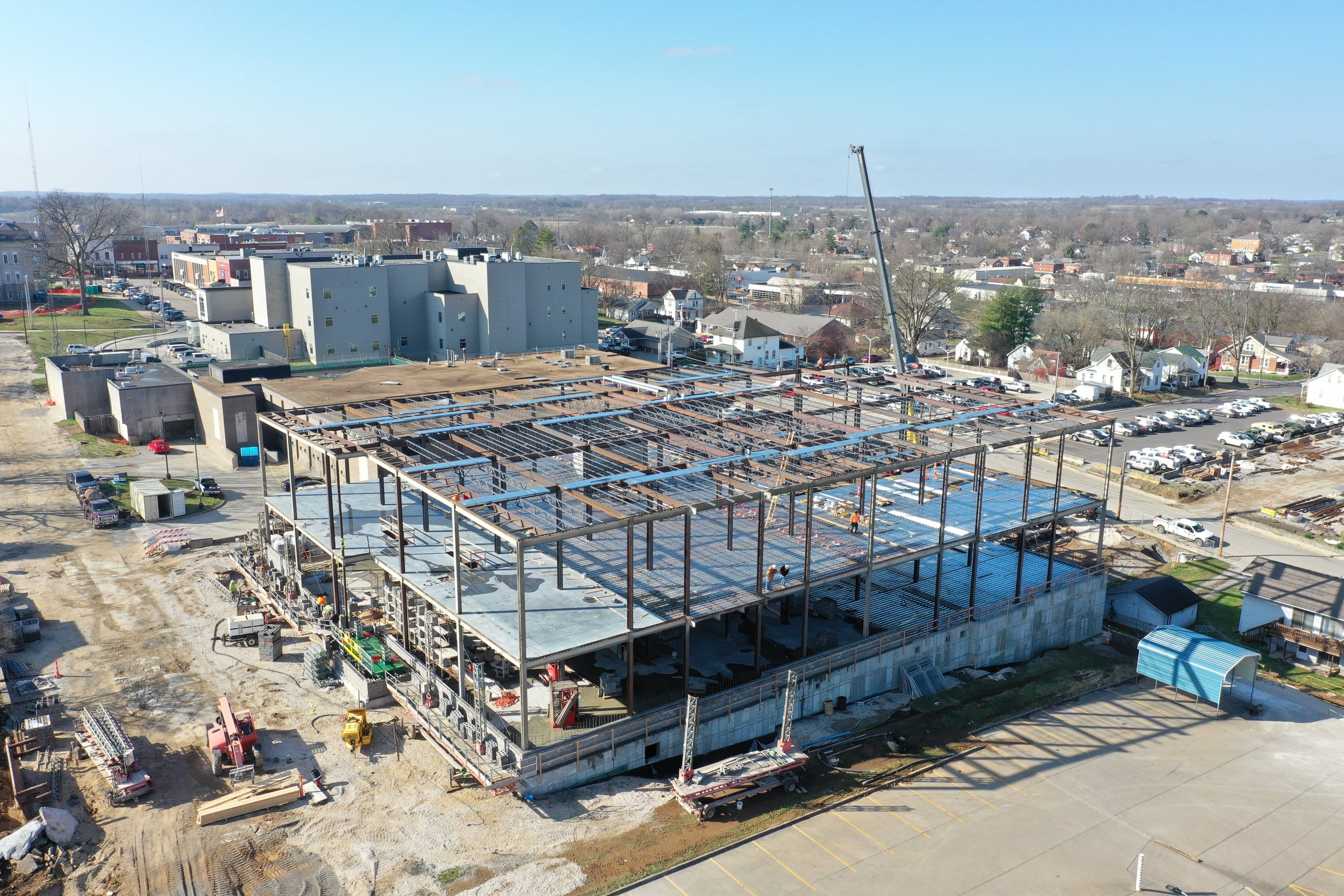
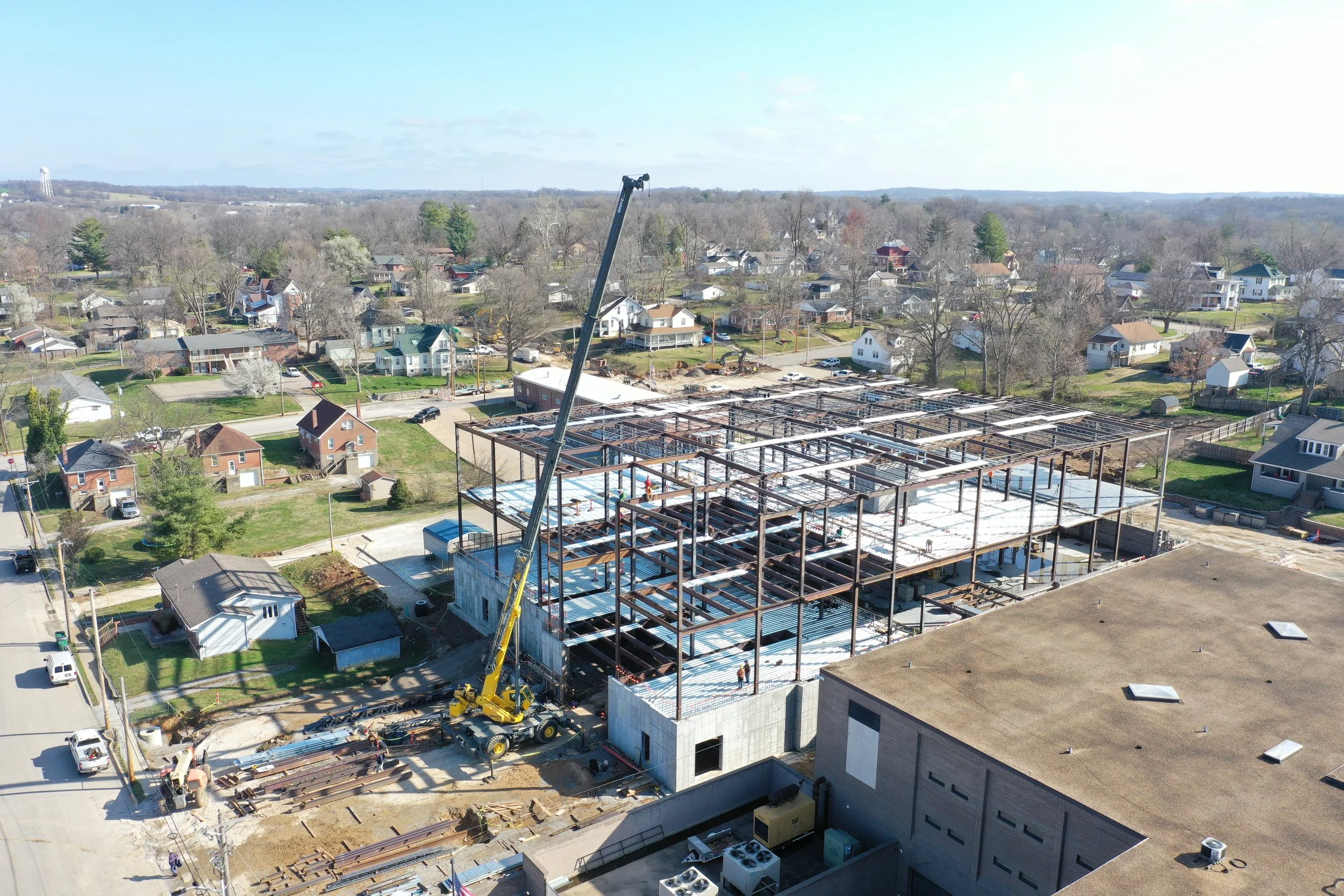
This major design-build project addressed the critical need for expanded and modernized detention facilities in Cape Girardeau County. The project was executed in two primary phases to increase capacity and improve operational efficiency.
The centerpiece of the project was the construction of a multi-story addition to the existing jail campus. This new facility added 360 beds, a new kitchen, and a new laundry to support the expanded population. The project also included an inmate property system, additional storage, and employee locker rooms. Following the completion of the new addition, the existing jail space was renovated to accommodate an additional 150 beds, bringing the total project bed count to 510.
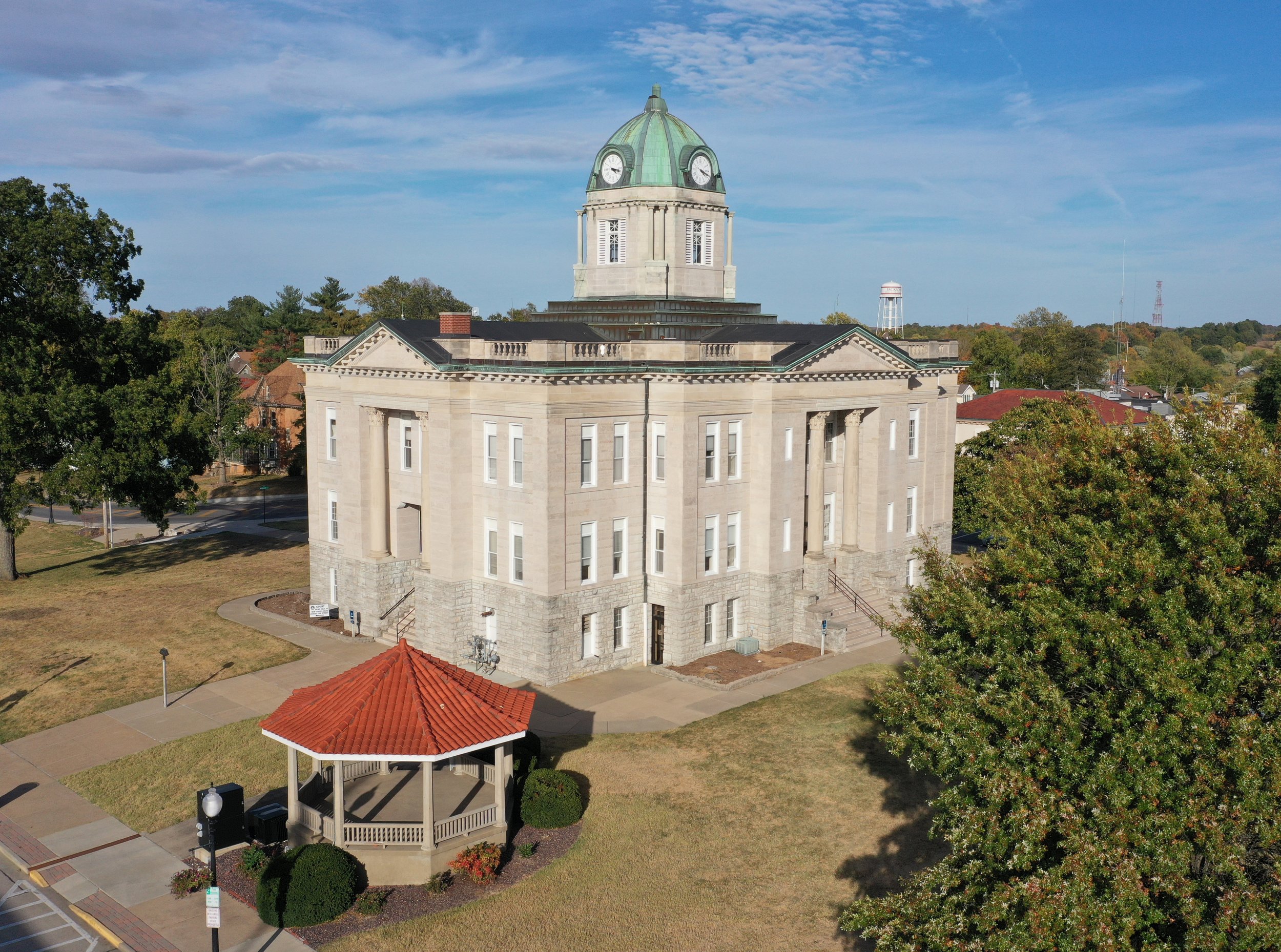
The contract for the jail expansion and renovation also included the comprehensive renovation of the historic 1908 Courthouse. The scope of work for this portion of the project was extensive, aiming to fully modernize the building while meticulously preserving its architectural heritage. The $9.8 million renovation involved a complete interior gutting, taking the structure all the way down to the brick before installing new insulation, heating and air conditioning, and electrical systems. A key element of the project was the careful restoration of the building’s iconic copper dome, a detailed process that alone cost $1.4 million, alongside the fine-tuning of the original clock mechanisms.
The project was completed after an 18-month renovation period, with the courthouse officially reopening in late April 2025. The revitalized building now serves as a modern hub for county government, housing offices for the county commission, highway department, treasurer, auditor, public administrator, county clerk, and HR department, along with commission chambers and a new elevator. Officials have hailed the project as a “renewal of community pride,” successfully transforming a long-vacant landmark into a functional and efficient space for the community.
More Projects